
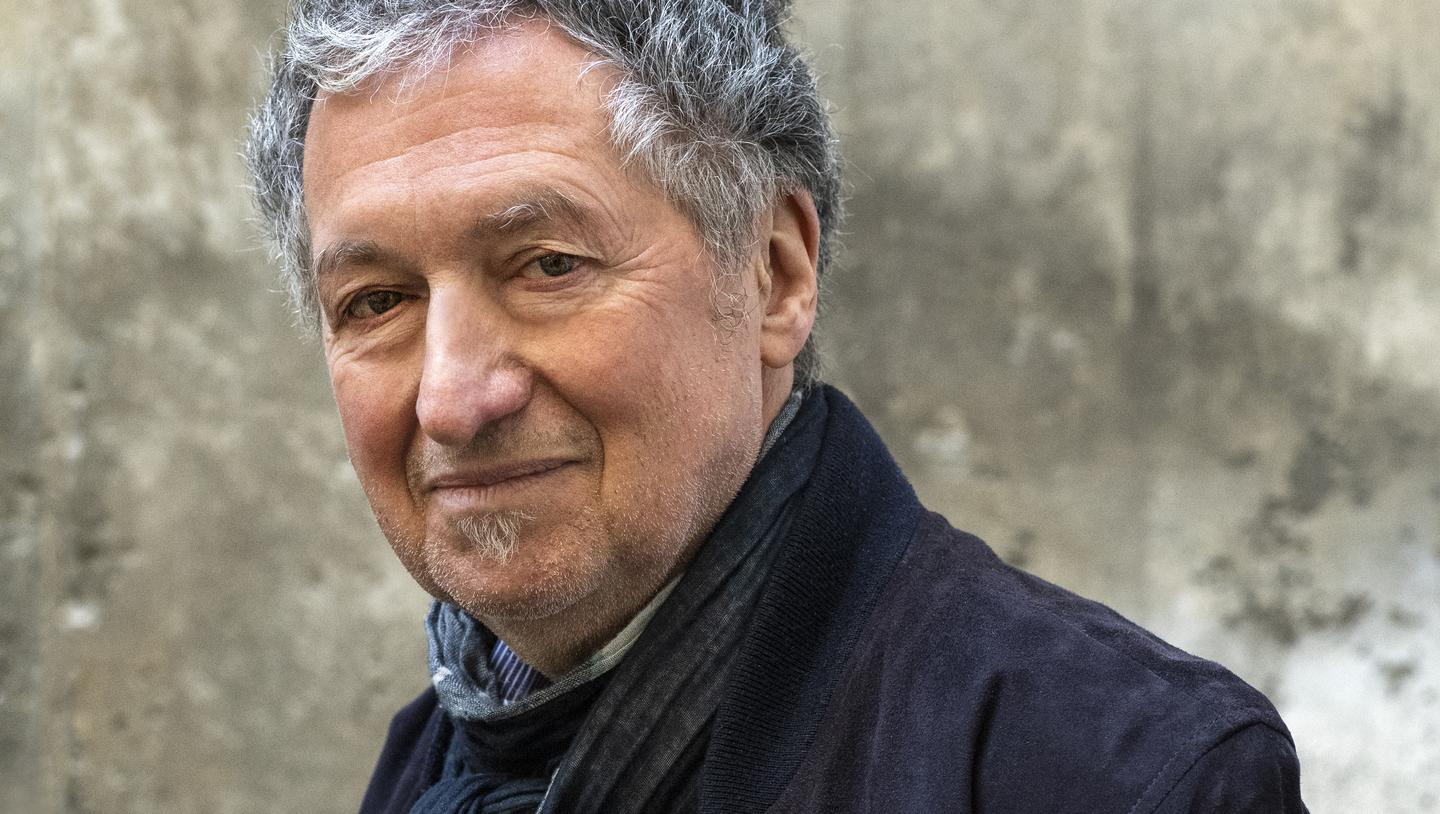
Sprechen und Schweigen
Reading circle with Rudolf Bussmann
23.11.2026 |
19:00 -
21:00
Event Links
Event details
Course dates
Monday, 19.10., 2.11., 23.11., 7.12.2026, 7.00–9.00 p.m.
Conversation is the most common and direct type of verbal interaction between people. However, it does not always run smoothly, for a variety of reasons it can be difficult or disturbed. The narrative literature of our culture is rich in varieties of talking past each other, of concealment, of exclusion due to linguistic differences.
Some interesting aspects of difficult communication can be found in the new publications that are at the center of the reading circle. On each of the four evenings, one of them will be discussed in detail under the direction of the writer Rudolf Bussmann .
The discussion of the books is based on the interests and reading experiences of the participants. It revolves around plot and characters, but also includes literary form, structure and language. If the works discussed are read by everyone towards the corresponding evening, nothing stands in the way of a lively exchange.
Registration
The course is fully booked and no further registrations can be accepted.
Course instructor
Rudolf Bussmann (Author)
Costs
CHF 160/120 (members of LiteraturBasel, students)
Registration deadline
monday, 21 september, 2026
Works and dates of their review:
Jehona Kicaj:ë.Roman (Monday, October 19, 2026)
"I learned early on that I had to remain silent as soon as we reached the Serbian border," says the first-person narrator. She brings back from Kosovo a language that is considered inferior on the other side of the border. In Germany, where she grew up, she had to give up her mother tongue altogether. Their suppression leads to somatic problems, which manifest themselves, among other things, as tension in the jaw. "When I speak German, I have the feeling that my jaw has to dislocate to pronounce the words." The narrator feels how the pressure to conform settles in her body, making it stiff. Jehona Kicaj describes with precision and great sensitivity how profound and painful a process can be, which is glossed over with the blanket word "linguistic integration".
(Wallstein Verlag 2025, 170 pages)
Gianna Olinda Cadonau:Am Kantenhain.Erzählungen. (Monday, November 2, 2026)
The protagonists in Gianna Olinda Cadonau's stories have to struggle with a traumatic past. Many have ended up in a village in Graubünden, where newcomers stand out, and even more so if they speak neither German nor Romansh. The stories revolve around strangers or those who feel alienated, the excluded, the lost, often young people who are shunned by their peers, left alone with their problems, abused by their parents. When someone seeks access to one of these people and gently approaches them, a fleeting closeness, a foreboding understanding, a tender gesture arises – signs that there are bridges that lead out of loneliness, that forlornness is not a total one.
(Lenos Verlag 2026, 127 pages)
Jon Fosse:Vaim.Roman (Monday, November 23, 2026)
The Nobel Prize winner's new novel is set on a Norwegian archipelago. It is minimally cast – one woman and three men – and resembles a chamber play in which the characters are fatefully connected to each other. The men, who have their say one after the other, give an insight into their lives, which they ultimately do not understand. In their monologues, they try to trace what is happening to them, but falter, turn around themselves, repeat incomprehensible things that they are unable to get to the bottom of. They talk past each other, more for themselves than for the other person, in a quasi-autistic insistence on their phrases and speech patterns. The longer they talk, the more clearly the loneliness in which they live becomes apparent.
(Rowohlt Verlag 2025, 156 pages)
Robert Menasse: The Life Decision.Novella (Monday, 7 December 2026)
At the beginning of the amendment is the protagonist's decision to quit his employment at the European Commission after realizing that nothing can be achieved within the bureaucratic monster. In order not to disappoint his sick old mother, who is so proud of his career, he does not tell her about his decision. And when he is unexpectedly confronted with the diagnosis of cancer, he doesn't want to tell her anything about it either, in order to spare her. His efforts revolve more and more around being able to preserve this double concealment. He drags out his own end with all medical tricks as much as possible in order to survive his mother and enable her to die a quiet death with his life's lie.
(Suhrkamp Verlag 2026, 158 pages)
Contributors and additional information:
RUDOLF BUSSMANN (*1947 in Olten) is a writer and editor. He accompanies writers, leads reading circles, writes novels, short prose, aphorisms, poetry. His most recent publications are the travel essay "Autumn in North Korea" (2021) and the poetry collection "Promised Land" (2024). He lives in Basel.
Venue
Literaturhaus Basel
Barfüssergasse 3
4051 Basel


All rights reserved.